Introduction:
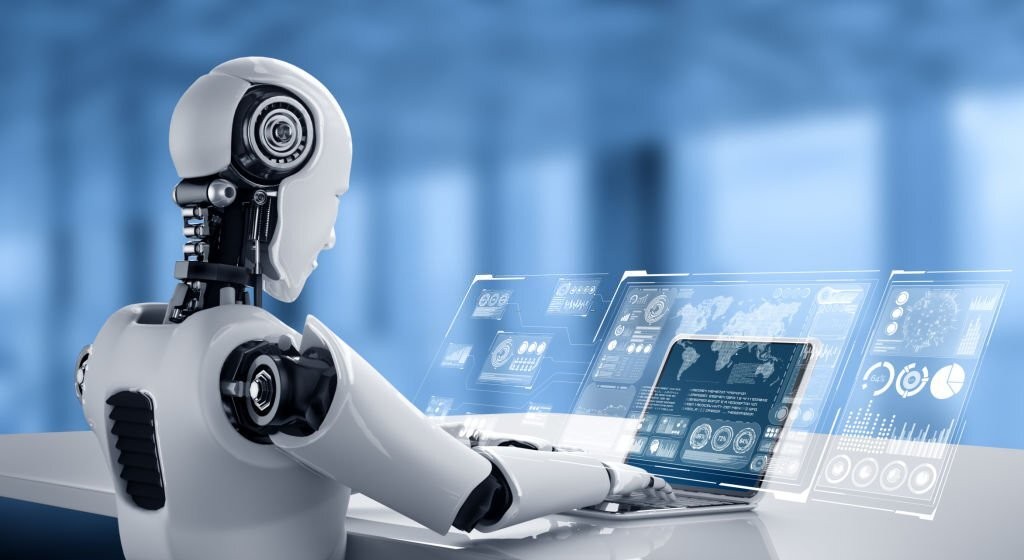
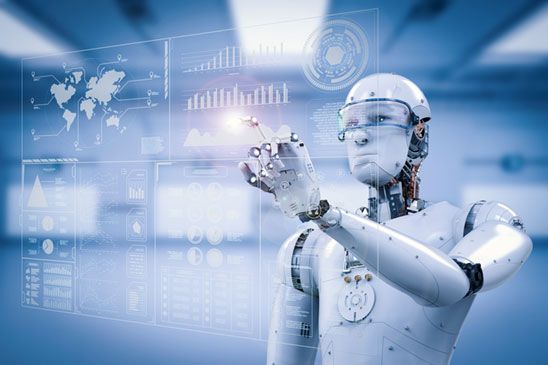
From mechanical arms on factory floors to intelligent humanoids that greet you at malls, robots are no longer science fiction—they’re part of our daily reality. Robotics is one of the most transformative technologies of the 21st century, blending engineering, AI, and innovation to reshape how we live and work.
What Is Robotics?
Robotics is a branch of engineering and science that deals with the design, construction, operation, and use of robots. A robot is typically a machine capable of carrying out complex actions automatically, especially when programmed by a computer. These machines can be physical (like humanoid robots) or virtual (software bots).
A Brief History of Robotics:
🏛️ Ancient Times: As early as 300 BC, Greek engineer Ctesibius created water-powered machines.
⚙️ 15th Century: Leonardo da Vinci sketched a mechanical knight—a humanoid that could sit, wave arms, and move its head.
🏭 20th Century: The first programmable robot arm, Unimate, revolutionized automotive assembly lines in the 1960s.
🤖 Today: From Mars rovers to robot surgeons, robotics has expanded across nearly every field imaginable.
Key Components of Robots
Sensors
To perceive the environment (e.g., cameras, LIDAR)
Actuators
To move parts (e.g., wheels, arms)
Controller
The brain of the robot (e.g., microprocessors)
Power Source
Battery, solar, or electric power
Software/AI
Instructions, machine learning, and decision logic
Types of Robots
Industrial Robots – Used in manufacturing (e.g., welding, assembly).
Service Robots – Perform tasks like cleaning, delivery, or assistance.
Medical Robots – Aid in surgeries, rehabilitation, or diagnostics.
Military Robots – Used for surveillance, bomb disposal, etc.
Exploration Robots – Used in space (e.g., NASA’s Curiosity Rover) or ocean research.
How Robotics Is Changing the World 🌍
💼 In the Workplace:
Increases productivity
Reduces human error
Automates repetitive tasks
🏥 In Healthcare:
Precision surgeries with robotic arms
Elder care assistants and drug delivery bots
🧠 In Education:
Teaching programming and AI through robotics kits
Enhancing STEM learning in classrooms
🚀 In Space & Exploration:
Robotic rovers exploring Mars
Underwater drones mapping the deep sea
Challenges in Robotics 🤔
Ethical concerns (job displacement, surveillance)
High cost of development
Dependence on power and internet
AI biases affecting decision-making
Future of Robotics 🚀
The future holds humanoid companions, robotic tutors, AI-powered soldiers, and autonomous flying taxis. With AI and robotics merging, machines will become more intelligent, more adaptive, and more human-like.
In fact, by 2030, robots are expected to handle over 30% of tasks in industries globally.
Final Thoughts:
Robotics isn’t just a branch of technology—it’s a revolution. As robots get smarter and more integrated into our lives, it’s crucial to balance innovation with ethics. The future isn’t about man vs machine—it’s about man with machine.