Introduction
Have you ever paused while locking your door and wondered who invented the first lock? Or how ancient civilizations protected their valuables without smart security systems? The humble lock and key have a thrilling history that spans over 6,000 years—from wooden bars across cave doors to digital fingerprint scanners. Let’s unlock this incredible journey.
1. The First Shelters: Safety Begins with Shelter
Long before locks existed, early humans found safety in nature’s shelters like caves. But caves weren’t available everywhere. Nearly 40,000 years ago, humans started building their own homes, using branches, hides, and stones. As they learned to store food, craft tools, and preserve their belongings, a new need emerged: security. That simple, instinctive urge to protect is what eventually led to the invention of locks.
2. The First Lock: Assyrian Innovation (circa 4000 BCE)
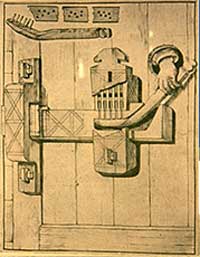
Over 6,000 years ago, in the heart of ancient Assyria (modern-day Iraq and Syria), archaeologists discovered the oldest known lock-and-key set. It was carved from wood and operated on a simple but clever mechanism. The large wooden key looked surprisingly like a toothbrush and was inserted into the lock to lift internal pins and open it. Imagine unlocking your grain storehouse or temple with something the size of a walking stick!
3. Egyptians and the Power of Pyramids
Fast forward to ancient Egypt, about 4,000 years ago, where the locking system was not only about safety but also about prestige. Egyptians refined the wooden pin-tumbler locks, securing treasures and tombs with oversized keys, often as long as an arm. The size of your key symbolized your importance—a giant key was as much a status symbol as it was a security device.
4. Romans Reinvent Security
Leave it to the Romans to combine practicality and innovation. They transitioned from wood to metal, using iron for locks and brass for keys, enhancing durability. They also introduced the concept of warded locks—with specific grooves inside, so only a key with a matching pattern could open the lock. Ingeniously, they wore keys as rings, cleverly merging fashion and function while keeping their possessions secure.
5. Medieval Mystique & the Dark Ages
During the Middle Ages, locks became increasingly artistic. Doors featured grand, ornamental locks shaped like animals or royal crests. Though many were beautiful to look at, their security was questionable. Still, they symbolized power and craftsmanship. Some locks were even designed to split open in two or to resemble a crab when unlocked—a touch of mechanical whimsy in an otherwise dark era.
6. The Padlock Revolution
The 18th century brought a turning point in lock design with Swedish engineer Christopher Polhem’s invention of the modern padlock. His locks used rotating metal discs inside an almond-shaped casing, making them nearly impossible to tamper with. Polhem’s engineering genius earned royal recognition, and his work spanned everything from clocks to industrial machines. His padlocks were so successful that he launched an entire factory to produce them.
7. 19th Century Innovations: Yale, Bramah & Chubb
Security took a leap forward in the 1800s. Joseph Bramah created a cylindrical lock so advanced that it remained unpicked for over 67 years. Jeremiah Chubb developed the detector lock, which would jam if tampered with. Meanwhile, Linus Yale Jr., building on his father’s work, introduced the pin-tumbler lock in 1848—a design that forms the basis of most door locks today. Some locksmiths even wore keys on stylish chains or designed locks that clicked open like tiny machines.
8. The Digital Age: Beyond Physical Keys
Today, the concept of a “key” has expanded beyond the physical. We swipe cards, scan fingerprints, and even use facial recognition to open doors. Brands like Yale and Master Lock have evolved with the times, offering WiFi-connected locks and smartphone-controlled systems. Some even unlock automatically when your phone is within range—a far cry from the days of wooden beams and giant iron keys.
Conclusion: Locks Evolve, Trust Remains
From ancient cave dwellings to smart homes, the evolution of locks mirrors our journey as a civilization. What started as a simple log behind a door has transformed into a marvel of engineering and digital innovation. Yet, through it all, one thing remains unchanged: our deep-rooted need to protect what matters most.
So the next time you hear the soft click of a lock, remember—you’re not just securing a door, you’re continuing a story thousands of years in the making.
Coming Soon: Top 10 Unbelievable Lock-Picking Techniques in History!